Wall Art for Workspaces That Support Focus and Well Being
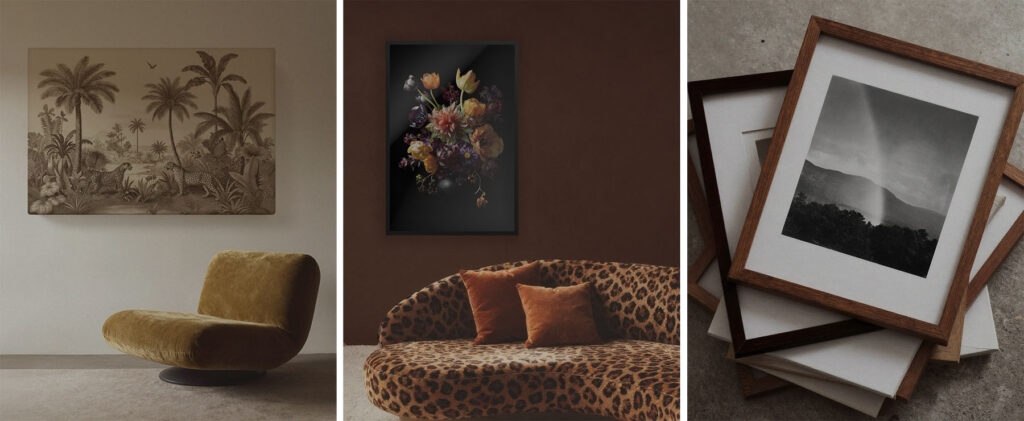
Most offices look like they were designed by an email thread. Wall art is one of the few levers you can pull that changes how the place feels, without rewriting your entire floor plan.
Workspace walls are doing more work than we give them credit for. They set the emotional temperature before anyone says hello, before the first meeting, before the second coffee. People read the room in seconds: is this place calm or tense, welcoming or purely functional, thoughtfully built or assembled in a hurry.
That matters for employees who spend their days there, for guests who walk in with fresh eyes, and for candidates who are quietly deciding whether they can picture themselves in the space. Art helps because it gives attention somewhere to land. It adds identity without needing a slogan. It can make a room feel steadier, warmer, and more human.
Neuroarchitecture, which looks at how environments shape mood and behavior, supports the core idea: the built environment influences stress and attention. Wall art is one of the simplest, fastest ways to adjust those signals because it changes what the eye sees and how long it rests there.
One more thing that deserves a seat at the grown up table: humor. A light sense of humor in the environment is permission to be a person. If you feel even a minimum desire to put something gently funny on the wall, dare to go for it.
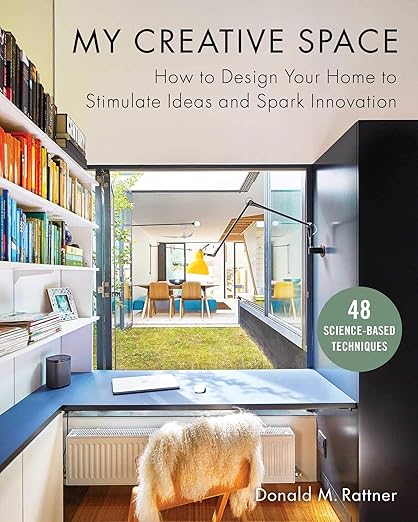
My Creative Space, by Donald M. Rattner
48 Science-backed Techniques to Boost Your Creativity
Winner of Six Awards: Nonfiction Authors Association, Chanticleer Book Awards, Nautilus Book Awards, American Bookfest Awards, and Eric Hoffer Awards. #1 Best Seller and #1 New Release on Amazon
What wall art does to a room full of humans
People experience a workspace as a stream of micro cues: lighting, acoustics, movement, visual noise, and whether the room feels easy to understand. Art can shift three human experiences quickly.
It creates an anchor
Screens fragment attention. Meetings pull it in waves. A good artwork creates a stable focal point so the room stops feeling like a temporary setup.
It supports belonging
A space with zero visual identity feels interchangeable. A space with intentional art feels like it belongs to people. That sense of belonging shows up as ease, and ease makes collaboration and focus more sustainable.
It signals care
When the walls look considered, people feel considered. That is employee experience, without another survey.
Neuroarchitecture principles you can actually use
No jargon, just the parts you can apply this week.
Reduce cognitive load
Workspaces already ask a lot from attention. Art can lower visual friction when it is cohesive and scaled well. Fewer pieces with clearer structure usually beats many small items competing for airtime.
Create rest points for attention
People need micro breaks that do not require leaving the room. A piece with depth, calm contrast, or a landscape like composition can act as a soft reset between tasks.
@randomworkplacethoughts Designing for neurodiversity doesn’t need to feel daunting. Here are three easy things you can do, that make a huge impact! #workplacestrategy #workplacedesign #interiordesign #neurodiversity #furniture ♬ Club Penguin Pizza Parlor – Cozy Penguin
Choosing art by zone
Different areas carry different social pressure. Let the art match the job.
Reception and client facing spaces
Goal: welcome, credibility, clarity.
Choose:
– One larger piece or a tight pair that holds the wall
– Materials that look intentional up close
– Subjects with confidence and warmth: structured abstract, calm photography, modern landscape
Focus areas and desk neighborhoods
Goal: calm attention, low distraction.
Choose:
– Layered neutrals or restrained color
– Clear compositions and gentle contrast
– Art that feels like visual breathing space
Avoid overly detailed scenes near desks. Your team already has enough tabs open.
Meeting rooms
Goal: presence, shared tone.
Choose:
One piece with enough scale to anchor the room
A tone that matches the meetings you want: calm for strategy, energizing for creative sessions, balanced for mixed use
Social areas and breakout spaces
Goal: warmth, connection, permission to be human.
Choose:
– Work that sparks light conversation
– One playful piece if it fits your culture
– Color that feels social without being loud
This is where sense of humor performs public service.
Corridors and transitions
Goal: continuity, wayfinding, a small lift between tasks.
Choose:
– A series with consistent framing
– A rhythm that guides movement
– Slightly brighter palettes for dim corridors
Corridors are where the day gets stitched together. Treat them like part of the experience.
Recommended reading: The New Workplace Experiences That People Crave
Sense of humor belongs on the walls
Sense of humor in a workspace does not mean turning the office into a meme page. It means giving people a moment of lightness that does not require permission.
It softens status, lowers social threat, makes guests feel welcome, reminds people they are allowed to be human while doing serious work.
Choose humor that ages well: keep it smart and gentle. Avoid anything that targets a group or relies on inside jokes that new hires will not get.
Prefer visual humor or lightly witty concepts rather than text heavy punchlines. Please. Thank you.
And again, the minimum desire rule applies. If you feel it, dare to go for it.
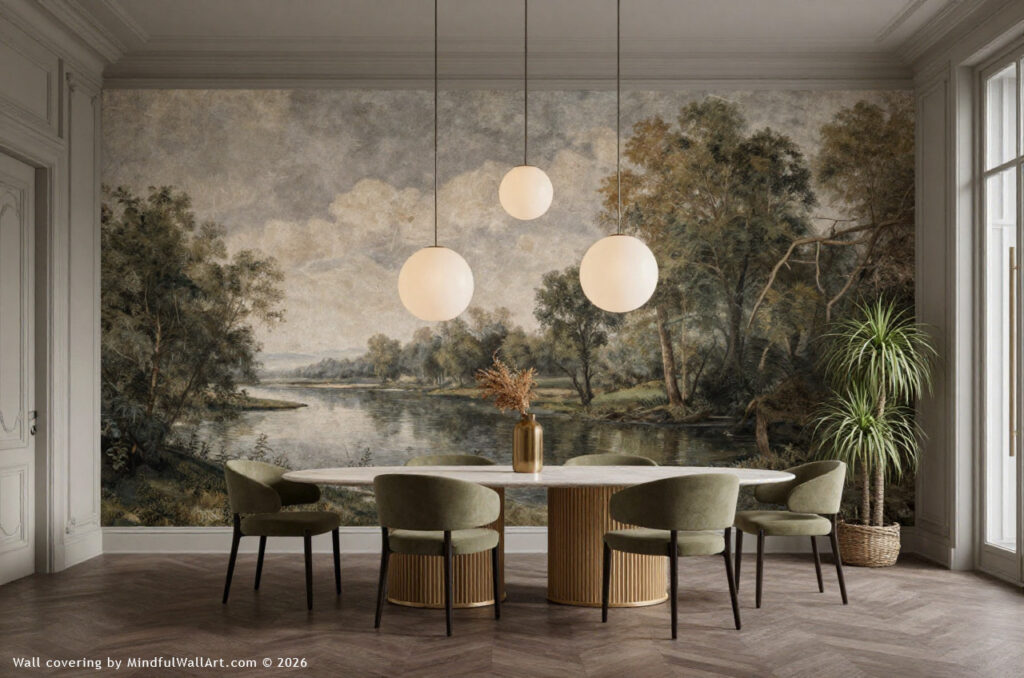
Custom murals and wall coverings as internal branding
Custom work is one of the most underused tools for company culture. It creates a sense of place, which matters more than people admit.
A custom mural can reflect the local context of your city, the craft behind your product, expressed abstractly, or a visual system inspired by your brand colors and shapes, translated into art rather than marketing.
This reinforces internal branding because it becomes daily evidence of identity. People see it, live with it, and absorb it without being told what to think.
A practical guardrail: if it looks like an ad, it fades into background. If it looks like a story the team recognizes, it becomes part of the place.
How to use this at home
Home offices and studios have their own twist: the camera. The wall behind you becomes part of your professional presence.
Pick one piece that is on your brand. “On your brand” means it reinforces how you want to be perceived: calm and precise, inventive and bold, warm and approachable, sharp and modern. That single cue can quietly strengthen your personal brand every time you show up on a call.
Keep it legible on video. Simple shapes, stable palettes, and clear composition read well. Busy patterns can shimmer on screen and distract.
Place it slightly off center. Centered behind your head can look like a staged backdrop. Slightly offset feels natural and still intentional.
Wall art shapes how work feels
When it supports focus and well being, it becomes part of a sustainable work ecosystem: calmer attention, warmer culture, and a space that feels intentionally made for humans.
Aim for fewer, better decisions. Match art to the behavior of each zone. Use custom work when you want identity that people can actually feel. Keep a sense of humor within reach. It is surprisingly effective office infrastructure.